
Jewellery
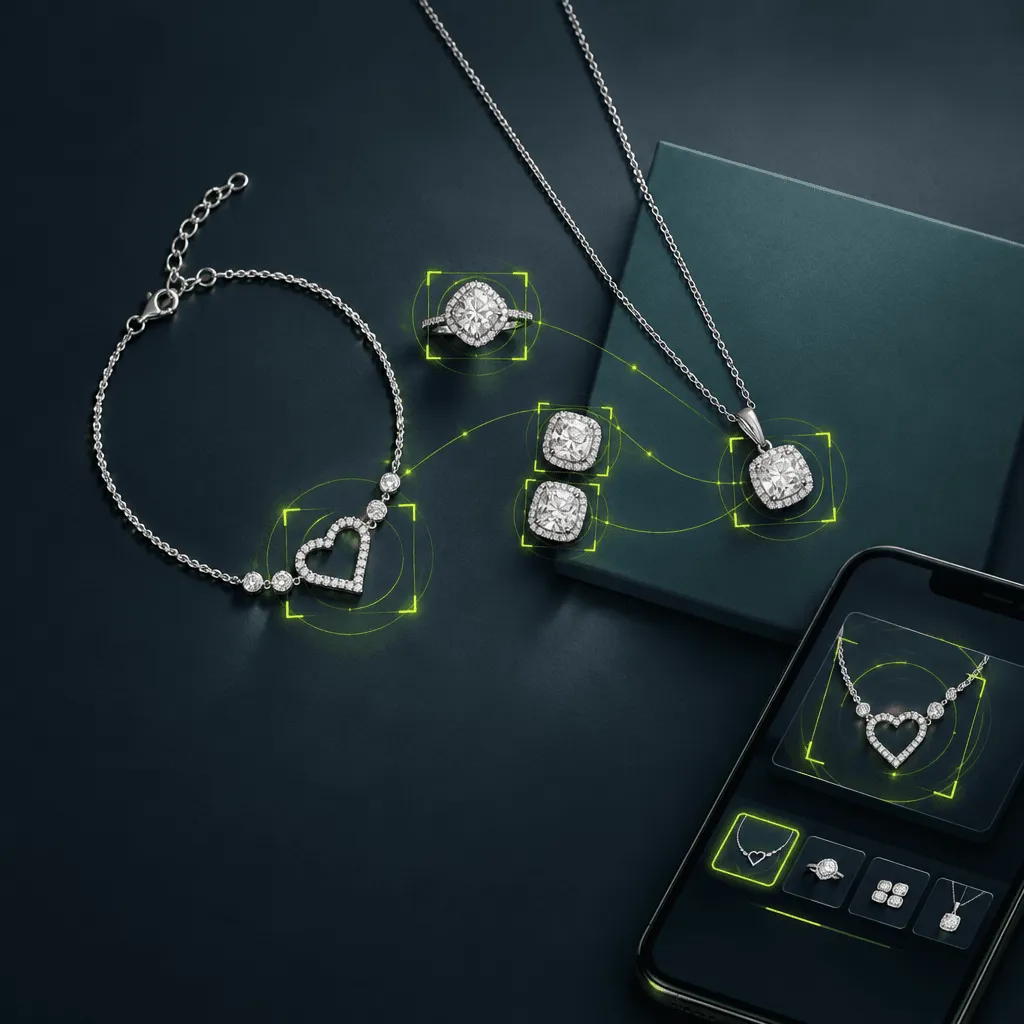
Jewellery shoppers start with visual inspiration, a category, or preferences like metal, gemstone, shape, size, and budget. Visidea supports discovery with Visual Search, Semantic Search, and Product Recommendations.
The problem
Where discovery breaks down
The friction shoppers hit when they explore this type of catalog.
- 1
Visual inspiration is hard to express
Shoppers may begin with a reference image or a general aesthetic preference without knowing the jewellery terminology needed to describe it. Text search and category navigation remain useful, but may not fully capture this starting point.
- 2
Jewellery terminology varies by shopper
Product descriptions can contain specialized terms for metals, gemstones, settings, shapes, dimensions, and product types. Shoppers may use everyday language instead, creating a gap between how they describe their preference and how products are documented.
- 3
Similar products need specification review
Jewellery items can look closely related while differing in materials, dimensions, sizing, gemstone descriptions, certification, or other documented specifications. Discovery experiences must help shoppers explore alternatives without implying that visual similarity means equivalent product characteristics.
The solution
How Visidea helps
Discovery experiences that answer those needs without replacing navigation and filters.
-
Discover from visual references
Visual Search can give shoppers another starting point when an image communicates their preference better than words. It can support exploration of visually related jewellery while leaving material, certification, sizing, and other product decisions to the documented product information.
-
Interpret natural-language preferences
Semantic Search can help shoppers express jewellery preferences using natural language when their wording differs from catalog terminology. This can complement conventional navigation and filters by providing another route into products represented in the retailer's catalog.
-
Extend discovery beyond one product
Product Recommendations can present relevant alternatives after a shopper reaches a product, supporting further exploration of the catalog. The practical value is broader discovery, while shoppers can continue comparing each recommended item's documented specifications independently.
Industry deep dive
Product discovery for Jewellery ecommerce
Jewellery ecommerce combines visual appeal with product details that can materially affect a purchasing decision. Shoppers may arrive with a reference image, a general idea such as “gold hoop earrings,” or a more specific preference involving metal color, gemstone, setting, shape, dimensions, or budget.
Some shoppers know exactly what they want but do not know the specialist terminology used in jewellery catalogs. Others are browsing for inspiration and want to compare visually related designs before narrowing their choice. Gift shoppers may begin with an occasion or product category and then evaluate documented materials, dimensions, sizes, and other specifications.
This creates a product-discovery challenge: the visual characteristics that attract a shopper are not necessarily the same as the technical attributes they need to evaluate before purchasing.
Conventional category navigation, filters, and keyword search remain important because they provide structured access to catalog information. However, they do not always capture the way shoppers naturally express aesthetic preferences or visual inspiration. Product discovery can therefore combine structured catalog information with discovery methods that help shoppers reach relevant products from different starting points.
For jewellery retailers and brands, this makes catalog quality particularly important. Product imagery, descriptions, taxonomy, variants, dimensions, ring sizes, metal information, gemstone descriptions, settings, chain lengths, and certification information where available can all contribute to the information shoppers need when evaluating products.
Where shoppers encounter friction
-
Starting from visual inspiration
A shopper may have seen a necklace, ring, bracelet, or pair of earrings whose overall design appeals to them but may not know the product terminology needed to reproduce that search in text. A visual discovery path can help them explore products with related visual characteristics. Similar appearance should not, however, be treated as proof of equivalent materials, craftsmanship, certification, value, or physical suitability.
-
Describing jewellery without specialist terminology
A shopper might describe a preference using everyday language rather than precise jewellery terminology: a particular shape, setting style, metal color, stone appearance, or overall aesthetic. Semantic search can help interpret the meaning of a natural-language query when the relevant concepts are represented in the product catalog, while the underlying product data remains the reference for specifications.
-
Evaluating alternatives without losing product detail
Once shoppers find an appealing product, they may want to explore alternatives that share some visual characteristics while differing in documented attributes such as material, dimensions, size, gemstone description, or price. Recommendations can support this exploration, but visually related products should still be evaluated individually against their actual catalog specifications.
Relevant product-discovery experiences
-
Visual Search
Visual Search is relevant when a shopper starts from an image rather than a product name. A retailer could provide a visual discovery path from a reference image or from an existing product, allowing shoppers to explore visually related jewellery. This is particularly useful for discovery-oriented browsing across rings, necklaces, bracelets, earrings, pendants, and charms.
The purpose is visual exploration, not jewellery authentication or technical specification matching. A visually similar product may use different metals, stones, dimensions, settings, or manufacturing methods, so shoppers should review the individual product information before purchasing.
Explore Visidea Visual Search
-
Semantic Search
Semantic Search is useful when shoppers can describe what they want but do not necessarily know the terminology used in the catalog. Queries can express combinations of product type, style, materials, colors, shapes, occasions, or other concepts represented in product information.
For example, a shopper might search for a minimalist necklace with a particular pendant style or describe a preference for a certain type of earrings without using the exact wording found in product titles. The usefulness of these queries depends on the quality and completeness of the underlying catalog content.
Explore Visidea Semantic Search
-
Product Recommendations
Product Recommendations can support exploration after a shopper has already reached a relevant product. In jewellery ecommerce, recommendation surfaces can help present visually related or otherwise relevant alternatives, giving shoppers another route through a catalog without requiring them to formulate a new search.
Recommendations should be treated as discovery aids rather than assertions that products are interchangeable. Materials, dimensions, sizing, certifications, and other product specifications should be evaluated separately for each item.
Explore Visidea Product Recommendations
-
Conversational Agent
A Conversational Agent can be relevant when shoppers need to express preferences through a more natural, question-based interaction. For example, a shopper could ask about jewellery described in the retailer's documented product information or request help navigating available product characteristics.
Its usefulness depends on the information made available to the system. It should not be presented as a substitute for professional gemological advice, authentication, valuation, or verification of claims that are not documented in the retailer's product information.
Explore Visidea Conversational Agent
An illustrative shopper journey
- 1
Consider a shopper who has saved an image of a pair of earrings with a minimalist geometric design.
- 2
Illustrative scenario: the shopper begins with the reference image because they do not know the product terminology needed to describe the design. A Visual Search experience could provide visually related earrings for further exploration. The shopper then reviews the product pages and compares the documented information for each option, such as metal type, dimensions, stone description, and available variants.
- 3
If the shopper decides to refine the search using words such as a product type, shape, material, or style preference represented in the catalog, Semantic Search could provide another discovery path.
- 4
The important distinction is between discovering visually or semantically related products and verifying what each product actually is. The shopper remains dependent on the retailer's product information for materials, dimensions, certifications, sizing, and other purchasing decisions.
Catalog and integration considerations
Jewellery catalogs can contain a particularly rich combination of visual and structured information. Before implementing a product-discovery experience, you should review the quality and consistency of product identifiers, product imagery, titles, descriptions, categories, variants, attributes, dimensions, sizes, and other documented specifications.
For Visual Search, high-quality product imagery and appropriate product organization are important considerations. Multiple product views can also provide useful visual coverage of jewellery items.
For Semantic Search and conversational discovery, product titles and descriptions should clearly represent the terminology shoppers are likely to use. Consistent taxonomy and structured attributes can make it easier to expose distinctions that matter to shoppers, such as product type, metal information, gemstone descriptions, dimensions, ring sizes, or chain lengths.
These considerations describe useful catalog information for product discovery; they should not be interpreted as a claim that every field is mandatory for Visidea ingestion. The appropriate data scope depends on the selected discovery experience and implementation.
You should also assess where discovery will appear in the storefront: search interfaces, product pages, recommendation surfaces, category experiences, or other relevant customer journeys. The storefront architecture, catalog structure, and intended discovery surfaces should be reviewed as part of the integration process.
For custom storefronts or platform scenarios that require a tailored connection, you can also evaluate the API integration approach.
What to evaluate
A jewellery retailer evaluating product discovery should assess the solution against the way its shoppers actually browse and the quality of its product data.
Relevant evaluation areas include:
- Whether shoppers can start discovery from images, natural-language descriptions, existing products, or structured categories.
- Whether search and recommendation experiences return products that are relevant enough to justify further product-page exploration.
- Whether visual alternatives are clearly distinguished from products that share equivalent specifications.
- Whether product information provides the materials, dimensions, sizes, gemstone descriptions, and other documented details shoppers need to make informed comparisons.
- Whether the selected experience fits naturally into existing search, navigation, product-page, and merchandising workflows.
- Whether the catalog can be kept sufficiently current as products, variants, attributes, and availability-related information change.
- Whether you can measure appropriate indicators such as discovery usage, search engagement, product-page visits from discovery surfaces, recommendation interactions, and downstream ecommerce outcomes using their existing analytics setup.
The right implementation depends on the retailer's catalog, storefront, customer journey, and discovery objectives. Visidea can be evaluated against those requirements to determine which product-discovery approach is appropriate.
Want to see it on your catalog?
Talk to our team and evaluate which discovery experiences make sense for your real catalog.