
Fashion
Fashion shoppers often discover products through visual inspiration, style concepts, occasions, and descriptive needs rather than precise product names. Visidea helps ecommerce explore product discovery approaches.
The problem
Where discovery breaks down
The friction shoppers hit when they explore this type of catalog.
- 1
Starting from visual inspiration
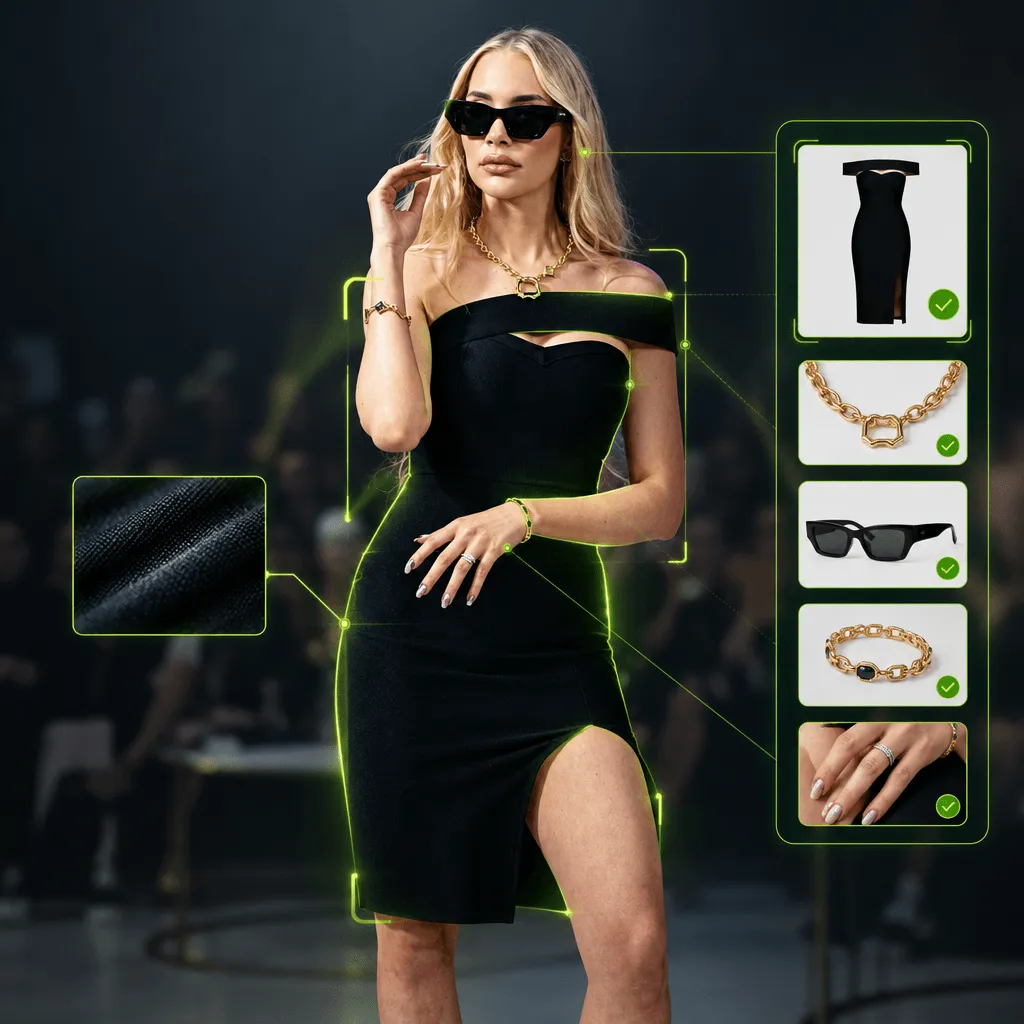
Fashion shoppers may begin with an image rather than a product name or precise query. The discovery challenge is connecting that visual starting point with products in the store catalog without requiring the shopper to translate the image into unfamiliar product terminology.
- 2
Mismatch in fashion terminology
Shoppers and fashion catalogs do not always use the same language. A customer may describe an item in everyday terms while the catalog uses different category or product terminology, creating friction when discovery depends heavily on exact keyword matching.
- 3
Continuing discovery after a find
Finding one relevant product is often only the beginning of a fashion shopping journey. Shoppers may want to explore related catalog items, but moving from an initial product to further discovery can require additional searches or navigation through categories and filters.
The solution
How Visidea helps
Discovery experiences that answer those needs without replacing navigation and filters.
-
Support image-led product discovery
Visual Search can give shoppers another starting point when they have product imagery but lack a precise product name. For fashion catalogs, this creates a discovery path that complements text search, category navigation, and filters rather than replacing them.
-
Better handle descriptive queries
Semantic Search can support discovery when shoppers describe what they are looking for using natural language. This is useful when their wording differs from the terminology used in the catalog and exact keyword matching does not fully express their intent.
-
Extend exploration from products
Product Recommendations can provide additional discovery paths after shoppers interact with products. In fashion ecommerce, this can help teams evaluate ways to keep catalog exploration connected to the shopper's current context and product journey.
Industry deep dive
Product discovery for Fashion ecommerce
Fashion ecommerce combines a broad and visually rich catalog with shopping journeys that do not always begin with a precise product name. A shopper may arrive looking for a specific garment, a complete outfit, something suitable for an occasion, or simply a product that resembles an image they have seen elsewhere.
The catalog itself contains many forms of information that influence product decisions: product imagery, category terminology, colors, materials, sizes, variants, descriptions, collections, and other merchandising information. The challenge for you is to make this information useful at the moment when a shopper knows what they want - or is still figuring it out.
Traditional category navigation, filters, and keyword search remain important. They provide structured ways to narrow a fashion catalog and are particularly useful when shoppers know the category, brand, size, or other terminology they want. But not every shopping intent translates neatly into a product name or exact keyword query.
Product discovery therefore benefits from combining structured navigation with discovery experiences that accommodate visual and descriptive forms of intent.
Where shoppers encounter friction
-
Starting from visual inspiration
A shopper may have an image of a jacket, dress, sneaker, or accessory but not know the product name, brand, or terminology used by the store. The challenge is connecting an image-led starting point with relevant products in the catalog without requiring the shopper to reconstruct the image as a text query.
-
Describing a product without knowing catalog terminology
Fashion terminology can vary between shoppers and retailers. A customer may describe an item using everyday language while the catalog uses different category names or product terminology. This can make an otherwise relevant query harder to express through exact keyword matching.
-
Narrowing a broad set of relevant products
Fashion catalogs can contain many products that are related by category, style context, or descriptive intent. Once a shopper has found a relevant product, the next challenge is continuing discovery without making them restart the search. Recommendations can provide additional paths through related catalog items.
Relevant product-discovery experiences
Visual Search can support shoppers who begin with an image rather than a product name. For fashion stores, an image can be a natural starting point when a shopper wants to explore products visually. Visidea's Visual Search experience can be evaluated as part of a journey that starts from visual inspiration and leads into the store's product catalog.
Semantic Search is relevant when shoppers express their needs in natural language rather than using the exact terminology found in the catalog. Semantic Search can be considered for journeys where the shopper's query is descriptive and the you want discovery to account for the meaning of the request rather than relying only on exact keyword matches.
Product Recommendations can extend discovery after a shopper has found or interacted with a product. Product Recommendations can be evaluated for surfaces where showing additional relevant products helps shoppers continue exploring the catalog.
These experiences address different stages of discovery rather than replacing conventional navigation, filters, product information, or merchandising controls.
An illustrative shopper journey
- 1
Consider a shopper who sees a photograph of a jacket they like but does not know its brand or exact product name.
- 2
The shopper starts from the image and wants to find something comparable in an online fashion catalog. An illustrative discovery journey could begin with visual search, allowing the shopper to use the image as the starting point for product exploration. Once relevant catalog products are found, the shopper can continue using the store's existing product pages, navigation, filters, and other discovery mechanisms.
- 3
If the shopper instead begins with a description such as a need for a particular type of jacket for a specific occasion, semantic search may provide a different discovery path.
- 4
These are illustrative scenarios. The exact behavior and available experience depend on the Visidea services selected, the store implementation, and the information available in the catalog.
Catalog and integration considerations
A fashion discovery implementation should start with the catalog rather than with the search interface alone. You should review the identifiers used for products and variants, the quality and consistency of product imagery, product descriptions, taxonomy, category terminology, and the way variants and other catalog information are represented.
Product imagery is particularly relevant when evaluating an image-led discovery experience. You should also consider how products are represented across the storefront and which discovery surfaces they want to enhance.
Catalog information can help you understand which discovery approaches are appropriate, but the presence of an attribute in a fashion catalog does not by itself mean that a discovery service recognizes, infers, or matches that attribute.
The same principle applies to product variants. Sizes, colors, materials, and other product information can be important to the shopper's decision, but you should distinguish between information available in the catalog and capabilities that have been specifically verified for the intended discovery experience.
Implementation requirements also depend on the storefront architecture and the selected Visidea service. Review the available integrations when assessing an implementation approach. For a custom storefront or platform scenario, the API integration option may also be relevant for technical evaluation.
What to evaluate
You should evaluate product discovery in the context of the shopper journey rather than judging a search or recommendation experience in isolation.
For visual discovery, useful questions include whether shoppers can begin from the types of imagery they commonly encounter and whether the resulting product exploration is understandable and useful.
For semantic discovery, you can assess how well representative fashion queries map to the terminology and product information in their catalog. Test cases should include both concise product requests and more descriptive shopping intents.
For recommendations, evaluate whether the selected placement fits naturally into the journey and whether the products shown provide useful additional paths through the catalog.
Measurement should be based on the intended business and customer-experience goals. Depending on the implementation, you may examine interaction with search or recommendation surfaces, product discovery depth, product-page engagement, and downstream ecommerce outcomes. These should be defined as evaluation metrics for the specific implementation rather than treated as guaranteed Visidea outcomes.
If you want to assess how these approaches could fit your fashion catalog and customer journey, contact Visidea to discuss the use case and implementation context.
Want to see it on your catalog?
Talk to our team and evaluate which discovery experiences make sense for your real catalog.